What Is Shadow Work? What Carl Jung Actually Meant vs. What Instagram Sells You
What is shadow work? The shadow work meaning you will find on Instagram involves journaling prompts with pastel backgrounds. On TikTok, it is a 60-second video about "healing your inner child." But the concept of the shadow originated with Carl Jung, the Swiss psychiatrist who first described it in the 1930s as the most difficult psychological work a human being can undertake. What he described has almost nothing to do with what social media is selling under the same name.
The hashtag #shadowwork has accumulated over 2.3 billion views on TikTok. Keila Shaheen, a 24-year-old marketing graduate and former creative strategist for TikTok, sold over one million copies of The Shadow Work Journal through TikTok Shop, with nearly 700,000 units moved by influencers earning a 15% commission on each sale. Dr. Nicole LePera (@the.holistic.psychologist, 9 million followers) released her own shadow work journal. Sheleana Aiyana's @risingwoman account (3 million followers) weaves shadow work into attachment theory and astrology. Thousands of smaller accounts post daily shadow work prompts in carousel format.
The content follows a reliable formula. A prompt asks you to journal about a childhood wound, an insecurity, or a pattern you keep repeating. You write for ten minutes. You feel something. You post about it. You move on. The implicit promise is that awareness equals integration: if you can name the pattern, you have healed it.
Jung would not recognize any of this. What social media calls shadow work is, at best, the first five minutes of a process that Jung described as the central challenge of an entire lifetime. At worst, it is a performance of vulnerability that substitutes emotional catharsis for genuine psychological transformation.
Get new posts when they publish
Do Shadow Work Prompts Actually Work?
Shadow work prompts are the backbone of the social media shadow work industry. A typical prompt reads: "What childhood experience shaped your biggest insecurity?" or "What quality do you judge most in others?" These prompts circulate in Instagram carousels, Pinterest graphics, and fillable PDF journals sold for anywhere from $12 to $35. They are the entry point for most people who encounter the concept of shadow work, and they are not entirely useless. But they have a structural limitation that no amount of prompt engineering can fix.
The limitation is this: shadow work prompts ask you to examine yourself using the very faculty that created the blind spot. Your ego, the part of your psyche that maintains your self-image, is the same mechanism that repressed the shadow material in the first place. Asking your ego to locate your shadow is like asking a security guard to identify the intruders he deliberately let through. He cannot do it, because his job was to not see them.
Writing about emotional experiences does have clinical support. Pennebaker's 1997 research demonstrated that expressive writing produces measurable improvements in metacognition and emotional regulation. But Pennebaker's findings support journaling as a tool for processing experiences you are already aware of. The shadow, by definition, is what you are not aware of. A prompt can guide you to examine your known wounds. It cannot guide you to the wound you do not know exists. That requires a different methodology entirely.
What Social Media Gets Right About Shadow Work
The Instagram version of shadow work is not entirely wrong. The basic premise, that there are parts of yourself you have pushed out of awareness and that those parts influence your behavior whether you acknowledge them or not, is an accurate simplification of Jung's shadow concept. The destigmatization of self-examination is genuinely valuable. A generation that might never have encountered the concept of the unconscious is at least asking the right question: what am I not seeing about myself?
But the Instagram version of shadow work stops precisely where the real work begins. The social media model makes three critical errors that separate it from what Carl Jung actually described.
What Instagram Shadow Work Gets Wrong About the Shadow
1. They confuse insecurities with the actual shadow. When Shaheen's journal asks you to write about a time you felt rejected, or when LePera posts a carousel about "the wound behind the pattern," they are directing your attention to material you are already somewhat aware of. You know you feel insecure. You know your father was emotionally unavailable. You know you self-sabotage. This is uncomfortable to look at, but it is not the shadow. The shadow, as Jung defined it in Aion (Collected Works, Vol. 9ii), is the part of yourself you cannot see. It is not the insecurity you are embarrassed about. It is the cruelty you do not believe you are capable of. It is the envy you would deny under oath. It is the part of your personality so incompatible with your self-image that your psyche has constructed an elaborate architecture of repression to keep it out of view. You do not find the shadow by journaling about things that make you sad. You find the shadow in the moments that make you righteous, the people who trigger disproportionate disgust, the qualities in others that you condemn with a vehemence that surprises even you.
2. Shadow work cannot be done alone. Jung was unequivocal on this point. The shadow is, by definition, what you cannot see about yourself. It requires a mirror. In analytical psychology, that mirror is the analyst, the transference relationship, the dream, or the active imagination figure that talks back. "One does not become enlightened by imagining figures of light, but by making the darkness conscious," Jung wrote in Alchemical Studies (CW 13, para. 335). The Instagram model replaces the analyst with the self. You ask yourself the prompts, you answer them, and you evaluate the answers. This is like trying to see your own blind spot by squinting harder. The very mechanism that created the repression is now being asked to undo it. It cannot. That is what repression means.
3. Insight is not integration. The social media model treats shadow work as a cognitive exercise: identify the pattern, name the wound, feel the feeling, done. But Jung was explicit that insight without integration changes nothing. "The shadow is a living part of the personality and therefore wants to live with it in some form. It cannot be argued out of existence or rationalized into harmlessness" (CW 9i, para. 44). Shadow integration requires sustained ethical effort. It requires behavioral change, relational repair, and the willingness to hold the tension between who you think you are and who you actually are, not for ten minutes of journaling, but for years. The Instagram version offers catharsis. Jung offered transformation. They are not the same thing.
How the Carl Jung Shadow Actually Appears in Dreams
If social media shadow work begins with a journal prompt, Jungian shadow work begins with what happens when you fall asleep. Jung considered dream analysis the most reliable method for encountering the shadow, precisely because dreams bypass the ego's defenses. You cannot curate your dreams. You cannot perform vulnerability in a dream. The unconscious simply shows you what you have refused to see.
In dreams, the shadow typically appears as a figure of the same sex as the dreamer: a threatening stranger, a despised acquaintance, a criminal, a version of yourself doing things you would never do while awake. Jungian commentators describe this figure as the "eternal antagonist" or the "dark brother within," the way Mephistopheles accompanied Faust. The shadow figure in a dream is not a metaphor. It is a personification of psychic content that has been split off from consciousness and now operates autonomously.
A man who prides himself on rationality dreams of a raging, violent version of himself. A woman who identifies as nurturing and self-sacrificing dreams of a cold, selfish woman who refuses to help anyone. A person who has built their identity around moral purity dreams of committing acts that horrify them. These shadow dreams are not random. They are compensatory. The unconscious is presenting exactly what the conscious attitude has excluded, and it does so with a precision that no journal prompt can replicate.
The critical difference is that the dream does not care about your self-image. The journal prompt asks, "What childhood wound still affects you?" The dream shows you murdering someone. The prompt operates within the boundaries of what your ego can tolerate. The dream does not. This is why dreams are so much more effective as a vehicle for shadow encounter: they present material the ego would never voluntarily examine. When you refuse to look at something, the dream forces the encounter.
Recurring dreams are particularly significant in shadow work. A recurring nightmare is often the shadow knocking on the same door repeatedly because you have not answered. In clinical practice, these dreams frequently resolve once the dreamer genuinely engages with the material they present. Not "engages" as in writes about them in a journal, but engages as in allows the encounter to change how they see themselves and how they behave in the world. Cartwright's longitudinal research (1991) on dream incorporation and emotional adaptation confirmed this pattern: progressive-sequential dream patterns, where problems are stated, worked on, and resolved, correlate with improved psychological adjustment, while repetitive dream patterns reflect unresolved emotional preoccupations.
Shadow Work Exercises That Actually Integrate the Shadow
If shadow work prompts are the shallow end, these are shadow work exercises rooted in what Jung and his successors actually practiced. They are harder, slower, and they work.
Active imagination. This technique, which Jung developed during his own confrontation with the unconscious from 1913 to 1917, involves entering a meditative state, allowing an image or figure from the unconscious to emerge, and then engaging it in dialogue. Not observing it. Not journaling about it. Speaking to it, and listening to what it says back. The figure has its own autonomy, its own perspective, its own demands. It will tell you things your ego does not want to hear. Jung documented his own active imagination practice in the Red Book, a record of encounters with autonomous psychic figures so vivid that he questioned his own sanity. He considered active imagination the most direct method for integrating unconscious shadow content, and he warned that it required psychological stability and ideally the guidance of an experienced analyst.
Dream amplification. Dream analysis in the Jungian tradition goes far beyond "what does this symbol mean." Jung's amplification method requires the analyst and analysand to explore a dream symbol through three concentric circles: personal associations (what does this specific image mean to this specific person?), cultural and historical parallels (where does this image appear in mythology, religion, fairy tales?), and archetypal significance (what universal human experience does this image point toward?). A snake in a dream is not "transformation" because a dream dictionary says so. It might be the dreamer's pet that died in childhood. It might be the serpent in Genesis. It might be the Kundalini. The meaning of shadow content in dreams emerges from the dreamer's life, not from a listicle.
Projection tracking. The simplest and most honest shadow work exercise requires no journal at all. For one week, notice every time you have a disproportionate emotional reaction to someone else's behavior. The colleague whose arrogance makes your blood boil. The friend whose passivity drives you insane. The public figure whose hypocrisy makes you want to throw your phone. Write down the quality that triggers you. Then sit with the most uncomfortable question in all of psychology: where does that same quality live in you? This is shadow work in its original Jungian form, and it will teach you more about your shadow in seven days than a year of Instagram prompts.
The analytic relationship. In analysis, the shadow manifests in the transference: the client projects disowned qualities onto the analyst, and the analyst's countertransference reveals which shadow elements are active. This relational process, two people in a room doing the dangerous work of seeing each other clearly, is where the deepest shadow integration happens. No amount of solo journaling replicates it. Jung insisted that his own analysts undergo personal analysis for exactly this reason: you cannot guide someone through territory you have not traveled yourself.
Is Shadow Work Dangerous? The Real Risk Nobody Talks About
Is shadow work dangerous? The answer depends entirely on what version you are practicing and how deep you go. The deepest problem with social media shadow work is not that it is shallow. It is that it can be actively harmful. When someone with significant trauma history begins excavating repressed material without professional support, the result is not healing. It is retraumatization. As one clinical assessment of the trend noted: "They are opening up material that they do not have the support they need to process it." The shadow contains rage, shame, grief, and terror that have been sealed away precisely because the psyche could not handle them at the time they occurred. Opening that seal requires a container: a trained professional, a therapeutic relationship, a safe space where the material can be held without overwhelming the ego. A TikTok video and a $15 journal is not that container.
Jung himself was nearly destroyed by his confrontation with the unconscious. The Red Book period (1913-1917), during which he deliberately opened himself to the contents of his own psyche, involved hallucinations, visions of apocalyptic destruction, encounters with autonomous figures who challenged his sanity, and a genuine risk of psychotic dissolution. He survived because he had decades of clinical training, a robust ego structure, and the intellectual framework to make sense of what was happening. He would not have recommended that a 22-year-old with unprocessed trauma attempt shadow work with a fill-in-the-blank workbook promoted by someone earning commission on every sale.
How to Do Shadow Work: A Guide for Beginners and Beyond
If you are a shadow work beginner, start here. Forget the prompts. Forget the journals. These three practices are where genuine shadow work begins.
First: pay attention to your dreams. Not with an app that tells you what a snake "means," but with genuine curiosity about what your unconscious is trying to show you. Write them down immediately upon waking. Sit with the images. Notice which figures disturb you and ask yourself honestly what they might represent about parts of yourself you have disowned.
Second: pay attention to your projections. The people who trigger you most intensely are almost always carrying your shadow for you. The colleague whose arrogance infuriates you, the ex whose selfishness you cannot forgive, the public figure whose hypocrisy disgusts you. Before you diagnose them, ask what quality in them you are most unwilling to recognize in yourself. This is shadow work in its simplest and most honest form.
Third: find a qualified guide. If you want to go deeper into shadow integration, find a therapist trained in depth psychology or Jungian analysis. Not because you are broken, but because the shadow is, by definition, what you cannot see alone. The process is longer, harder, and more expensive than a journal. It is also the only version that actually works.
Jung did not invent shadow work so that it could be reduced to a carousel of affirmations. He described the confrontation with the shadow as a moral problem that "challenges the whole ego-personality" (CW 9ii, para. 14). It is not a self-care ritual. It is not a wellness trend. It is the most difficult and most important psychological work a human being can undertake. Treat it accordingly.
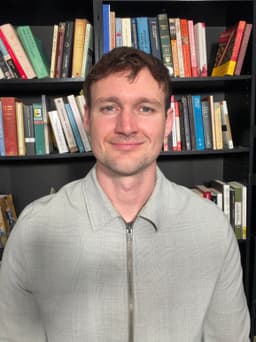
About the Author
Brandon P
Brandon P is the founder of DeepJung and a researcher in Jungian dream analysis. After a transformative dream experience in 2024, he immersed himself in Carl Jung's Collected Works, studying archetypal psychology, dream interpretation methodology, and the neuroscience that validates Jung's core theories.
His research draws from Jung's compensatory dream theory, Jaak Panksepp's affective neuroscience, Mark Solms' neuropsychoanalysis, and the work of Marie-Louise von Franz. He has analyzed hundreds of dreams using formalized Jungian methodology and is a member of the Baton Rouge Jung Society.
References
Cartwright, R. D. (1991). Dreams that work: The relation of dream incorporation to adaptation to stressful events. Dreaming, 1(1), 3-9.
Pennebaker, J. W. (1997). Writing about emotional experiences as a therapeutic process. Psychological Science, 8(3), 162-166.