Meet the Team
The minds behind DeepJung's approach to dream interpretation
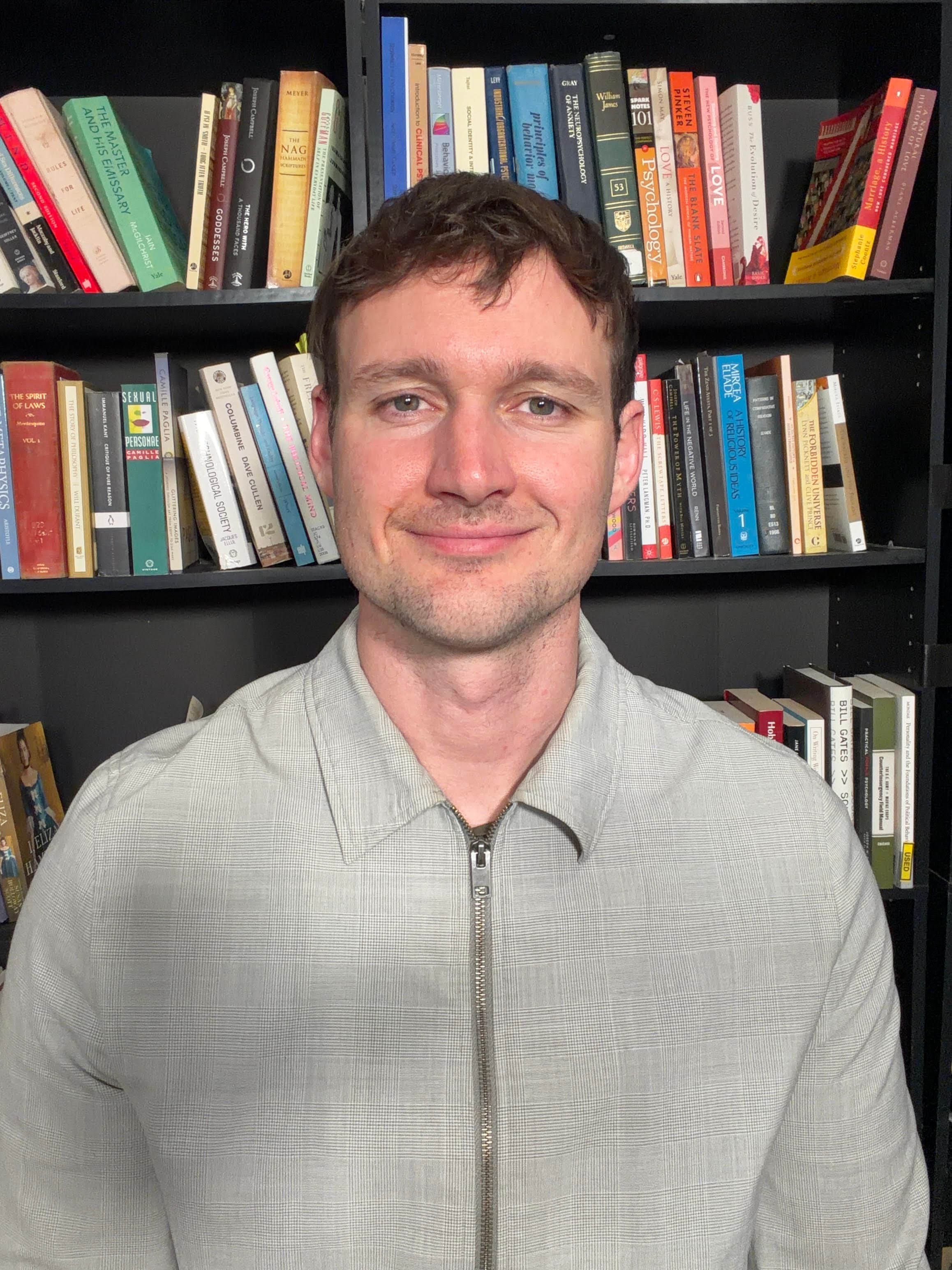
In April 2024, I was sitting on the fourth floor of an office building working on an article that needed to be posted, but my mind was elsewhere. I was thinking about a dream I'd had the night before.
In the dream, there was a rocket launch scheduled for the day. I was in the car with my mother. She told me I had to get on the rocket, but I didn't want to. I was afraid it would blow up, like the Challenger space shuttle. She told me I need not be afraid. It was time for me to go to Mars.
All at once, it hit me, and I knew exactly what it meant. I was relying too much on my family for support when I needed to be courageous. You can't journey to the stars if you're stuck on the ground in a fearful state. That realization changed my life.
This was before I had read a single page of Carl Jung.
I'd heard his name before, and I had always written down my dreams. I always knew they weren't just "random neural firings" like we've all been told. Something in those dreams was too precise, too emotionally targeted, to be noise.
Then I read Archetypes and the Collective Unconscious. My mind was blown, and I was hooked.
I wanted a Jungian interpretation of my own dreams, but I couldn't afford a Jungian analyst. Sessions run $150-300 an hour, and the waitlists are months long. So I had to learn Jung's method myself. I started with the Collected Works and didn't stop. I've now read through Jung's major volumes on dream analysis, archetypes, and the structure of the psyche, alongside the neuroscience that validates his core claims. Researchers like Mark Solms, who proved dreams are generated by the brain's motivation circuits. Robert Stickgold, whose NEXTUP model shows how dreams process emotional memory. Jaak Panksepp, who mapped the seven affective circuits that drive all mammalian emotion.
I've journaled every memorable dream since that day. Every one gets a full Jungian analysis. Compensatory function, archetypal content, emotional circuit mapping.
Then I discovered r/DreamInterpretation and started playing with an idea: what if Jung's method could be formalized into a system? Not a dream dictionary, those are useless. A real analytical framework that replicates what a trained Jungian analyst does.
I started analyzing strangers' dreams through a Jungian lens. Nearly every interpretation landed. People would message me saying I'd described feelings they hadn't told anyone about. I was stunned. How could a method developed a century ago be this precise?
Then I realized the method was formalizable. The compensatory principle, the archetypal patterns, the emotional circuits. It could be structured into code. But would it actually work? That was the real question.
It worked. I tracked down every dream that Carl Jung and several of his colleagues had analyzed in their published works. My system gave the same interpretation as Jung did almost every time.
Then I tested it on live dreams from r/DreamInterpretation. The code gave the same interpretation I would have given manually.
That's when I knew this needed to exist as a product. Not because the world needs another dream app. There are plenty of those, and they're all shallow. Because there are millions of people who know their dreams mean something, can feel it, but have no access to the depth of analysis that Jungian psychology provides. Jungian analysts are rare, expensive, and concentrated in a handful of cities. The method itself is brilliant. The distribution is broken.
DeepJung fixes the distribution.
The system is built on Jung's compensatory dream theory, Panksepp's seven affective circuits (SEEKING, RAGE, FEAR, LUST, CARE, PANIC/GRIEF, PLAY), and a proprietary framework mapping the specific life situations dreams respond to. It doesn't give you generic symbol lookups. It analyzes your specific dream against your specific life context and tells you what your unconscious is actually trying to communicate.
I built this because I needed it and it didn't exist. Now it does.
Professional Affiliations
- Member, Baton Rouge Jung Society
Reading List
The foundational texts that shaped DeepJung's methodology:
- Carl Jung - Archetypes and the Collective Unconscious
- Carl Jung - Modern Man in Search of a Soul
- Carl Jung - Dreams (Collected Works)
- Marie-Louise von Franz - Dreams
- Marie-Louise von Franz - Psychotherapy
- June Singer - Boundaries of the Soul
- Jordan Peterson - Maps of Meaning
- Jaak Panksepp - Affective Neuroscience
- Paul Ricoeur - The Rule of Metaphor
- Iain McGilchrist - The Master and His Emissary
Podcast Appearances
Interviews and discussions about Jungian dream analysis:
YouTube & Video Content
Videos by Brandon P exploring Jungian psychology through film and culture:
Academic Papers Cited
Peer-reviewed research supporting DeepJung's methodology:
- Solms, M. (2000). Dreaming and REM sleep are controlled by different brain mechanisms. Behavioral and Brain Sciences, 23(6), 843-850.
- Panksepp, J. (2011). The basic emotional circuits of mammalian brains: Do animals have affective lives? Neuroscience & Biobehavioral Reviews, 35(9), 1791-1804.
- Walker, M.P., & van der Helm, E. (2009). Overnight therapy? The role of sleep in emotional brain processing. Psychological Bulletin, 135(5), 731-748.
Get in Touch
For inquiries about DeepJung.
contact@deepjung.com