The Divine Feminine: What Jung, Campbell, and Ancient Mythology Actually Meant
The divine feminine is not about gender. It is a psychological force that exists in every human being, male or female, and it has been recognized by every major civilization in recorded history. Carl Jung called it the anima. Joseph Campbell traced it across thousands of myths. The ancient Zoroastrians personified it as the daena, the vision-soul who meets you at the bridge between life and death. When modern culture talks about "the divine feminine," it is reaching for something real, but almost always getting it wrong. This article explains what it actually is, why it matters, and what happens when you lose contact with it.
Get new posts when they publish
The Instagram Version vs. the Real Thing
If you search "divine feminine" on social media, you will find crystals, moon rituals, and aesthetic quote cards about "honoring your inner goddess." None of this is wrong in the way that a crayon drawing of the ocean is not wrong. It captures something. But it captures it the way a child captures it, with the complexity stripped out and the danger removed.
The real divine feminine — the one that Jung wrote about and Campbell spent his career tracking across cultures — is not soft. It is not safe. It is not exclusively nurturing. It is the force that creates and the force that destroys. It gives birth and it devours. It heals and it drives men insane. Every ancient culture understood this duality, and the fact that modern spirituality has sanitized it into pure warmth and light is itself a symptom of how disconnected we have become from the actual archetype.
Jung's Anima: The Woman Inside Every Man
Carl Jung proposed that every man carries an unconscious feminine image inside his psyche, which he called the anima. This is not a metaphor. It is a structural component of the male unconscious, built from every experience of the feminine a man has ever had: his mother, his first love, every woman who impressed or terrified him, and deeper than all of these, an inherited pattern that predates any individual experience.
The anima functions as a bridge. She connects the conscious ego to the deeper layers of the unconscious. When a man is in good relationship with his anima, he has access to intuition, emotional depth, creativity, and a felt sense of meaning. When he is not, he becomes dry, rigid, irritable, and trapped in a purely rational existence that slowly empties of purpose. Jung noticed that men who had lost contact with the feminine dimension of their own psyche tended to project it outward, falling into obsessive infatuation or irrational hatred of actual women. The projection is a compensation. The psyche is trying to force contact with something the conscious mind has refused to acknowledge.
Women carry a corresponding masculine image, which Jung called the animus. The same dynamics apply in reverse: a woman disconnected from her animus loses access to discernment and the capacity to discriminate, which is how Jung characterized the animus function in The Psychology of the Transference (CW 16). She may project it onto domineering or intellectual men, seeking externally what belongs internally. The point is that the divine feminine is not a women's issue. It is a human issue. Every psyche contains both poles, and psychological health depends on integrating both.
The Zoroastrian Daena: Your Soul as a Beautiful Woman
Long before Jung, the ancient Zoroastrians had an image for this that is almost unbearably precise. In the Hadoxt Nask, one of the oldest Zoroastrian sacred texts, when a righteous person dies, they approach the Chinvat Bridge — the bridge between the world of the living and the world beyond. There they are met by a figure called the daena: a maiden of fifteen years, radiant, with a body "brighter than the brightest of creatures." She is not the person's soul exactly. She is their vision-soul, the visible form of their conscience and spiritual condition. She leads them across the bridge, which presents its broad side for safe passage.
If the person has lived wickedly, the same daena appears as a foul, withered old woman. The bridge turns razor-thin, like the edge of a blade. A demon emerges and drags the soul downward into the House of Lies. Same figure, same function, but now reflecting the degradation of the inner life.
What the Zoroastrians understood, and what Jung would later rediscover in clinical terms, is that the feminine image inside the psyche is not a static decoration. It is a living reflection of your relationship to your own depths. She changes as you change. She is radiant when you are honest and integrated. She becomes monstrous when you lie, dissociate, or refuse the inner work. The daena is not waiting for you at death. She is with you now, and you can feel her quality in the emotional tone of your inner life.
Campbell's Goddess: The World as Mother
Joseph Campbell approached the same territory through comparative mythology. In The Hero with a Thousand Faces, he identified a recurring motif he called "The Meeting with the Goddess." It occurs during the Initiation phase of the hero's journey, when the hero, having endured the Road of Trials, encounters a feminine figure who embodies what Campbell called "the totality of what can be known." In his words: "Woman, in the picture language of mythology, represents the totality of what can be known. The hero is the one who comes to know."
Campbell was explicit that this goddess is not one-sided. She is the mother who nourishes and the mother who abandons. She is the lover who inspires and the temptress who destroys. She is Kali with a necklace of skulls and she is the Virgin Mary in serene blue. She is Medusa and she is Aphrodite. The hero's task is not to worship one face and reject the other, but to encounter the totality. Only a consciousness that can hold both the nurturing and the terrifying aspects of the feminine has actually met the goddess. Everyone else is dealing with a partial image, which is another way of saying they are still projecting.
Campbell noted that civilizations which suppress the dark feminine do not actually eliminate it. They drive it underground, where it festers and eventually erupts as mass pathology. The European witch trials killed an estimated 40,000 to 60,000 people between the 15th and 18th centuries, roughly 75 to 80 percent of them women. These trials were driven primarily by secular courts, not by the Church itself, but the theological framework that identified feminine power with demonic influence ran deep in the culture. The Victorian hysteria epidemic, the modern epidemic of eating disorders and body dysmorphia: all of these can be read as the return of a repressed feminine that a culture refused to integrate consciously.
Trinity in The Matrix: The Anima on Screen
You can see the anima operating in almost every story you have ever loved, once you know what to look for. Trinity in The Matrix is one of the clearest modern examples. She is the first real person Neo encounters after waking up. She is competent where he is helpless. She guides him through the underworld of the real. And critically, it is her love that literally resurrects him at the climax of the first film. Neo dies, and Trinity's kiss brings him back.
This is not a romance subplot. It is the anima performing her mythological function. She is the bridge between the dead mechanical existence of the Matrix and the painful, vital reality outside it. She is the daena at the Chinvat Bridge. She is Campbell's goddess at the midpoint of the journey. The Wachowskis named her Trinity, the third element that resolves the opposition between the One and the Machine. Her name is itself a theological statement about the role of the feminine in achieving wholeness.
Notice too that Trinity is not soft. She kills people. She is dangerous, skilled, and operates in a world of extreme violence. This is the divine feminine as it actually appears in mythology: not passive receptivity, but fierce, directed, protective force. Kali wears a necklace of severed heads. Athena carries a spear. The Morrigan appears as a crow over battlefields. The idea that femininity equals gentleness is a modern invention with no mythological support whatsoever.
The Light and the Dark: Why Both Sides Matter
Jung divided the anima into stages of development. At the lowest level, she appears as Eve: pure biology, sexuality, fertility. Above that, she becomes Helen: romantic beauty, aesthetic inspiration. Higher still, she becomes Mary: spiritual devotion, idealized love. At the highest level, she becomes Sophia: wisdom itself, the direct experience of meaning.
But each stage has a shadow. Eve becomes the devouring mother who consumes her children's independence. Helen becomes the fatal attraction that wrecks marriages and careers. Mary becomes the impossible standard that makes all real women seem inadequate. Sophia becomes cold abstraction, the man who prefers ideas to people and lives entirely in his head.
The same duality exists in the masculine archetypes. The King provides order but also tyranny. The Warrior protects but also destroys indiscriminately. The Magician illuminates but also manipulates. The Lover connects but also dissolves all boundaries into chaos. Every archetype is a coin with two faces. The divine feminine is not exempt from this, and pretending it is exempt is itself a form of repression that guarantees the shadow side will show up uninvited.
This is what the Instagram version misses completely. If you only honor the light feminine, you are not honoring the feminine at all. You are performing a selective worship that is actually a defense mechanism against the full reality of the archetype. The divine feminine includes the terrible mother, the seductress, the witch, the crone. It includes grief, rage, jealousy, and possessiveness. These are not corruptions of the feminine. They are dimensions of it. And until you can look at Kali and see the same force that holds a nursing infant, you have not actually encountered the divine feminine. You have encountered a greeting card.
Why This Matters Now
We live in a culture that has simultaneously commercialized the divine feminine and lost contact with it. The commercialization looks like goddess retreats, womb healing workshops, and "feminine energy" TikToks. The loss of contact looks like epidemic loneliness, collapsing birth rates, a generation of men who cannot sustain intimate relationships, and a generation of women who feel unseen despite having more visibility than any women in history.
These are not separate problems. They are the same problem wearing different masks. When the anima is projected rather than integrated, men chase women who embody the projection and flee from women who do not. When the animus is projected rather than integrated, women attach to men who embody focused will and then resent them for being controlling. The entire dating landscape of the 2020s can be read as a civilization-wide anima/animus projection crisis, and no amount of dating advice will fix it because the problem is not behavioral. It is structural. It lives in the architecture of the psyche.
Jung would say the solution is individuation: the conscious integration of the contrasexual archetype. Campbell would say the solution is the hero's journey: the descent into the underworld and the meeting with the goddess in her full, terrifying, beautiful totality. The Zoroastrians would say the solution is living in such a way that your daena is beautiful when you finally meet her.
They are all saying the same thing. The divine feminine is not something you worship externally. It is something you develop a relationship with internally. And the quality of that relationship determines the quality of every relationship you will ever have with another human being.
Sources
- Carl Jung, "The Syzygy: Anima and Animus," in Aion (CW Vol. 9 Part 2), 1951.
- Carl Jung, "The Psychology of the Transference," in The Practice of Psychotherapy (CW Vol. 16).
- Joseph Campbell, The Hero with a Thousand Faces (1949), Part I, Chapter 2.
- The Hadoxt Nask (Zoroastrian Avestan text); Marijan Mole scholarship cited.
- Joseph Campbell, Goddesses: Mysteries of the Feminine Divine (2013).
- Brian Levack, The Witch-Hunt in Early Modern Europe (4th ed., 2015).
- Robert Moore and Douglas Gillette, King, Warrior, Magician, Lover (1990).
About the Author
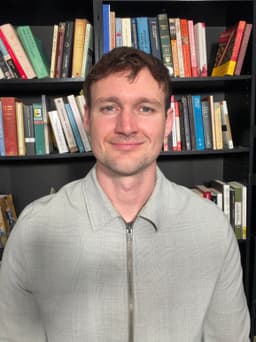
Brandon P
Brandon P is the founder of DeepJung and a researcher in Jungian dream analysis. After a transformative dream experience in 2024, he immersed himself in Carl Jung's Collected Works, studying archetypal psychology, dream interpretation methodology, and the neuroscience that validates Jung's core theories.
His research draws from Jung's compensatory dream theory, Jaak Panksepp's affective neuroscience, Mark Solms' neuropsychoanalysis, and the work of Marie-Louise von Franz. He has analyzed hundreds of dreams using formalized Jungian methodology and is a member of the Baton Rouge Jung Society.