Amplification and Circumambulation: How to Actually Read a Dream Image
Most people try to figure out a dream image one of two ways. They look it up in a dream dictionary, or they free-associate and follow whatever thought comes next. Both fail. The dream dictionary hands you a generic meaning that has nothing to do with your life. Free association pulls you off the image within a minute. Jung built a method that does neither. The method has two parts that almost always get blurred together: circumambulation and amplification. They are different operations and they do different jobs.
Get new posts when they publish
Circumambulation: Looking at the Image Itself
Circumambulation is Latin for walking around something. Jung used the word for the practice of examining a dream image in detail before doing anything else with it. The discipline is purely descriptive. You are not yet asking what the image means. You are forcing yourself to look at what was actually there in the dream.
Take a snake dream as the example. Circumambulation looks like this. What kind of snake. What size. What color. What was it doing. Was it moving or still. Was it watching you or looking away. Where was it. What was the lighting. What were you doing. Was the snake aggressive, calm, or neutral. What did its skin look like. What was the temperature in the dream. Were you alone with it.
Most people skip this step. They have a vague memory of a snake and immediately reach for what snakes mean. Circumambulation refuses that move. The features matter. A coiled black snake in dim light is not the same dream as a calm green snake in sunlight, and any interpretation that ignores the difference will be wrong about which dream you actually had.
Jung borrowed the word from the alchemists, who used it for approaching a centre by circling rather than charging at it directly. The translation into dream work is concrete. Stay on the image. Describe it from one angle. Then from another. Write down what you see. Do not interpret yet.
Amplification: Bringing Material to the Image
Amplification is the opposite move. Once you have the image in detail, you bring in material from outside the dream and see what attaches.
There are three sources, and you work them in order.
Source one is your personal life. What memories does this snake bring up. What people. What situations. List them without filtering. Twenty items, not three.
Source two is your body. Hold the image in your mind and notice where you feel it. Tightness in the chest. Heat. A pulled-back feeling. A specific quality of calm. Then ask where else in your current life that exact feeling is already present.
Source three is the cultural record. Where else has this image appeared in stories you know. Genesis, where the snake breaks a perfect arrangement. The staff of Asclepius, where the snake is a healing symbol. Snake-shedding-skin as a near-universal image of transformation. A film you saw. A song lyric. A warning your grandmother gave you about the garden.
Once you have all three layers, the work is to look for points where they agree. Your personal calm in the dream matches the dream snake's own calm. Asclepius is also calm. The shedding-skin meaning fits the calm of a transition already underway. Three independent layers converge on the same reading. That convergence is the test that tells you the reading is correct. A reading from one source alone is a guess. A reading where personal life, body, and cultural record all point at the same thing is much harder to fake.
Why Each Fails Without the Other
Run circumambulation alone and you end up with a detailed description of a snake and no idea what it has to do with your life. The image is clearer. Nothing is connected. The work has not produced a reading.
Run amplification alone and you produce a pile of material that floats free of the dream. You start with the snake, you list a memory, the memory leads to another memory, you write a journal entry about your job, and the snake disappears. Whatever you decide the dream is about will be a guess, because you stopped looking at the dream.
Together they correct each other. Circumambulation gives you the detailed image to attach material to. Amplification gives you the material to attach. The image stays specific because circumambulation keeps you on it. The reading stays grounded because amplification only counts when it converges with the image's own features.
How To Run Both, Step by Step
Write the dream down. One paragraph or less. Pick the strongest image.
Step one, circumambulation. Describe the image in detail. Color, size, action, position, lighting, your relationship to it, anything you can recover. Five or ten minutes of straight description. No interpretation.
Step two, personal associations. What memories does the image bring up. List them. What people does it remind you of. List them. What situations in your life does it call to mind. List them.
Step three, body. Hold the image in your mind. Where do you feel it. Describe the quality of the feeling. Note where else in your current life that exact feeling shows up.
Step four, cultural. Where else have you seen this image. Books, films, religion, myth, family stories, advertising. List everything. Do not filter for what seems deep enough.
Step five, convergence. Where do the layers point at the same thing. The personal memory of trust collapsing at a job. The body's sense of a decision already made. The cultural snake of transformation. All three pointing at a transition you have already started but have not named.
Step six, name the connection in one sentence and identify the action. The dream is telling you the trust has already collapsed and you have already decided to leave. The action is to name that out loud and set a timeline.
This is the same convergence logic that powers Jungian dream analysis at large. The feeling-first move gets you to the image. Amplification and circumambulation get you from the image to the reading.
A Worked Example
Take the snake dream. Circumambulation gives you: green snake, calm, watching, did not move when you got close, sunlight, you were also calm, no one else in the scene, the snake's skin looked dry.
Personal associations: an aquarium you visited as a child, a coworker you stopped trusting two years ago, a job you have been considering leaving for the last six months, a friend who once told you the worst decisions are the ones you keep deferring.
Body: calm, but the specific calm of having already made a decision. Same calm you felt last Tuesday walking past your boss's office without going in.
Cultural: snake shedding skin as a near-universal image of transformation. Asclepius as healing. Genesis as the figure that breaks an arrangement that was not real to begin with.
Convergence: the dream is calm, your body is calm, the cultural meaning is transition, the personal layer points at the job. The dream is not a warning. It is a statement that the decision is already made. It is asking you to acknowledge it.
Concrete action: name the decision out loud to one trusted person this week, then set a timeline for the move.
When the Layers Do Not Converge
Sometimes you do all four steps and the layers do not agree. The personal associations point at one thing, the body points at another, the cultural record at a third. The convergence test fails. This is information, not failure.
The most common cause is that the dominant feeling in the dream is the one you are most reluctant to name, and your conscious mind is steering the amplification around it. Notice which layer you are reading fastest and most confidently, and slow down on the one you keep skipping or dismissing. The layer you are avoiding is usually where the dream is pointing. This is also the shadow at work — the part of yourself the ego refuses to see is exactly where the dream is steering, and you can feel yourself flinching past it.
The second cause is that you have not done enough circumambulation. The image is still too vague for the layers to converge on anything specific. Go back to the image and describe more features. Color, texture, sound, the exact position of your body in the dream, whether anyone else was there. The more specific the image, the more specific the convergence can get.
The third cause is that the dream is about more than one thing. Run the method on the next strongest image in the dream, in parallel, and check whether the two readings line up or address different problems.
Common Mistakes
Skipping circumambulation. You barely remember the snake and you are already googling what snakes mean. The work fails before it begins, because the interpretation is being applied to a snake-in-general, not to the snake you actually dreamed.
Drifting in amplification. The associations remind you of other associations and you stop returning to the image. Catch this and come back to the snake every time.
Stopping at the personal layer. The personal memories feel important so you call it done. Without the body and cultural layers, you have no convergence test for whether your reading is right.
Stopping at the cultural layer. The mythological parallels feel deep so you call it done. Without the personal layer, the reading does not connect to your actual life and produces nothing you can act on.
Treating it as decoding. The image is not hiding a message. The image is the message, and amplification is how you connect it to specific waking content.
What You Get When It Works
A specific connection between the dream and a specific situation in your waking life. A named action that follows from the dream. The dream connects to something you can do this week.
Circumambulation produced a detailed image. Amplification produced three independent layers of material. The convergence of the layers identified the reading. The reading produced an action. That is the method. The rest is doing the work. If the same dream keeps returning, the work has not been done yet.
Sources
- Jung, C. G. (1934/1985). The Practical Use of Dream-Analysis. In The Practice of Psychotherapy, Collected Works of C. G. Jung, Volume 16. Princeton University Press.
- Jung, C. G. (1935/1976). The Tavistock Lectures. In Collected Works of C. G. Jung, Volume 18. Princeton University Press. Includes Jung's description of his dream method as a circumambulation around the dream picture, contrasted with the linear movement of free association.
- Jung, C. G. (1968). Psychology and Alchemy, Collected Works of C. G. Jung, Volume 12. Princeton University Press. Discusses circumambulatio as an alchemical figure for the psyche's relation to its own centre, and provides Jung's most extended use of amplification across mythological, alchemical, and religious material.
- Jung, C. G. (1964). Approaching the Unconscious. In Man and His Symbols. Doubleday. Lay-language treatment of how Jung worked with dream images.
- Roesler, C. (2020). Jungian theory of dreaming and contemporary dream research: findings from the research project Structural Dream Analysis. Journal of Analytical Psychology, 65(1), 44-66. Empirical support for the structural approach that circumambulation and amplification together produce.
About the Author
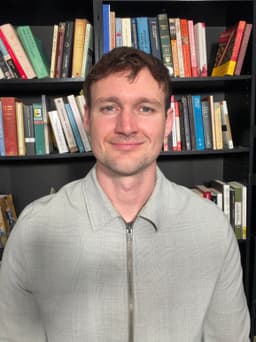
Brandon P
Brandon P is the founder of DeepJung and a researcher in Jungian dream analysis. After a transformative dream experience in 2024, he immersed himself in Carl Jung's Collected Works, studying archetypal psychology, dream interpretation methodology, and the neuroscience that validates Jung's core theories.
His research draws from Jung's compensatory dream theory, Jaak Panksepp's affective neuroscience, Mark Solms' neuropsychoanalysis, and the work of Marie-Louise von Franz. He has analyzed hundreds of dreams using formalized Jungian methodology and is a member of the Baton Rouge Jung Society.