Why Do We Dream? What Neuroscience Actually Found
For nearly three decades, mainstream neuroscience told us our dreams were garbage. Literally. The dominant scientific theory from 1977 until the early 2000s held that dreams were nothing more than random electrical noise fired from your brainstem during REM sleep, and that the storylines, the characters, the terror and the beauty of your dream life were just your cortex desperately trying to stitch a narrative out of neurological static. Then a South African neuropsychologist named Mark Solms started studying patients with brain lesions and found something that shattered the entire framework: patients whose brainstems were destroyed still dreamed, and patients whose forebrains were destroyed, with their brainstems completely intact, stopped dreaming entirely. Dreams were not coming from where neuroscience said they were coming from. They were being generated by the brain's motivation and emotion circuits, the same dopaminergic system that drives desire, goal-seeking, and reward. The brain was not generating random noise during sleep. It was doing something it wanted to do. In 2009, Matthew Walker's research at UC Berkeley confirmed that 75-95% of all dreams contain emotional content and that REM sleep is specialized for emotional memory processing, with the brain's logical-critique centers deliberately shut down so the emotional processing can run uninterrupted. The "dreams are meaningless" era is over. The question is no longer whether dreams mean something. It is which model of meaning best explains what the science now shows.
Get new posts when they publish
The Three Theories of Dream Interpretation (Quick Summary)
1. Activation-Synthesis (Hobson & McCarley, 1977): Dreams are random neural noise from the brainstem during REM sleep. The cortex fabricates a story from the noise. Dreams have no psychological meaning. Status: largely debunked. Solms' lesion studies showed dreams originate in the forebrain, not the brainstem. The model's core mechanism was wrong.
2. Wish Fulfillment (Freud, 1900): Dreams are disguised fulfillments of repressed wishes, primarily sexual or aggressive. A "censor" distorts the true meaning into symbolic imagery. Status: partially supported. The motivational/dopaminergic basis of dreaming supports Freud's claim that dreams are driven by desire. The elaborate disguise mechanism is not supported.
3. Compensatory Function (Jung, 1916-1960): Dreams compensate for one-sided conscious attitudes by presenting what the waking mind has excluded. Dreams are not disguised; they say exactly what they mean, but in symbolic language. The unconscious uses dreams to bring balance to the psyche. Status: best supported by current neuroscience. The default mode network, emotional processing research, and continuity hypothesis all converge on a model closer to Jungian dream analysis than any other.
The "Dreams Are Garbage" Theory: Activation-Synthesis
In 1977, Harvard psychiatrists J. Allan Hobson and Robert McCarley published "The brain as a dream state generator" in the American Journal of Psychiatry, and for the next two decades it was treated as the definitive scientific word on dreaming. Their claim was straightforward: during REM sleep, neurons in the pontine brainstem fire in random bursts. These signals propagate upward to the cortex, which receives a flood of chaotic activation and does what cortexes do: it tries to make a story out of it. The vivid imagery, the narratives, the emotional intensity of dreams were all, in this view, post-hoc confabulation. Your brain was making sense of noise, the way you see faces in clouds.
The implications were devastating for depth psychology. If dreams were just the cortex narrating brainstem static, then Freud's wish fulfillment and Jung's compensatory function were both elaborate fictions projected onto a meaningless biological process. Hobson was explicit about this. He called psychoanalytic dream interpretation "a delusion" and dismissed a century of clinical dream work as pattern-recognition applied to randomness.
The problem is that the model's foundational empirical claims turned out to be wrong. According to G. William Domhoff's review at UC Santa Cruz, all of the key empirical claims of activation-synthesis had been shown to be incorrect by the mid-1980s. Dreams do not occur only during REM sleep. Dream content is not random; it correlates systematically with waking emotional concerns. And most critically, the brainstem is not the generator of dreaming.
Why Do We Dream? The Neuroscience Solms Discovered
Mark Solms, a neuropsychologist trained in both clinical neuroscience and psychoanalysis, conducted a series of lesion analyses in the 1990s that produced what is now recognized as the critical double dissociation in dream science. His findings, published in Behavioral and Brain Sciences in 2000 as "Dreaming and REM sleep are controlled by different brain mechanisms", demonstrated two things:
First, patients with brainstem lesions that eliminated REM sleep still reported dreams. If activation-synthesis were correct, destroying the brainstem's random signal generator should have eliminated dreaming entirely. It did not.
Second, patients with damage to specific forebrain regions, particularly the ventromedial prefrontal cortex and deep bilateral frontal white matter, lost the ability to dream altogether, even though their REM sleep was completely intact. The brainstem was firing normally. The cortex was receiving the signals. But with the forebrain motivation circuits offline, no dreams were generated.
The forebrain region Solms identified as critical for dream generation was the mesocortical-mesolimbic dopamine system, the same circuit that Jaak Panksepp had identified as the SEEKING system: the brain's core motivational apparatus, responsible for desire, curiosity, goal-directed behavior, and reward anticipation. Dreams were not being generated by random brainstem noise. They were being generated by the brain's wanting system. The brain was not stumbling into dreams. It was motivated to dream.
This finding did something remarkable: it simultaneously vindicated Freud's core insight (dreams are driven by desire and motivation) while explaining why his specific model of disguise and censorship was unnecessary. Dreams are motivationally driven, yes. But they are not necessarily disguised wishes. They are the brain's emotional processing system doing exactly what it is designed to do, in the only language available to it during sleep: imagery and narrative.
Dream Analysis and the Default Mode Network: Why Your Dreams Are About You
Neuroimaging research in the 2000s and 2010s revealed that dreaming activates the default mode network (DMN), a set of brain regions that become active during rest, daydreaming, autobiographical memory retrieval, and self-referential thought. The DMN is, in a real sense, the brain's "self" network. It is where you process who you are, who you have been, and who you might become.
During REM sleep, the DMN is highly active. The amygdala (emotional processing) and hippocampus (memory consolidation) are online. The anterior cingulate cortex (emotion regulation) is engaged. And critically, the dorsolateral prefrontal cortex, responsible for logical analysis, reality testing, and emotional suppression, is deliberately shut down. The brain is not malfunctioning during dreams. It is running a specific configuration: emotional processing with the logical critic turned off.
This architecture explains something that both Freud and Jung understood clinically but could not explain neurologically: dreams feel emotionally overwhelming and logically bizarre because the brain is optimized during REM for emotional truth, not rational coherence. The strangeness of dreams is not a bug. It is a feature of a system designed to process emotional material without the interference of the waking mind's defenses and rationalizations.
Matthew Walker: Dreams as Emotional Processing
Matthew Walker's research at UC Berkeley, published in Psychological Bulletin (2009) and Frontiers in Neuroscience (2009), established that REM sleep is specialized for emotional memory processing. His key findings: 75-95% of dream reports contain emotional content. REM sleep selectively consolidates emotional memories while reducing their affective charge. People who get adequate REM sleep show better emotional regulation the following day. And the dreaming brain's specific neural signature, high limbic activation with suppressed prefrontal control, is precisely the configuration you would design if you wanted to reprocess emotional experiences without the ego's defenses getting in the way.
Walker described REM sleep as providing "overnight therapy," a phrase that would have been unremarkable to any Jungian analyst. The idea that the psyche processes emotional material during sleep, presenting it to consciousness in a form that facilitates integration, is not a new discovery. It is the compensatory function Jung described. What is new is that neuroscience can now explain the mechanism: the default mode network provides the self-referential processing, the dopaminergic SEEKING system provides the motivational drive, the amygdala and hippocampus provide the emotional memory content, and the suppressed prefrontal cortex ensures the material is processed without being rationalized away.
Dream Interpretation According to Freud: What Survived and What Didn't
Sigmund Freud published The Interpretation of Dreams in 1900, and it remains one of the most influential books ever written about the human mind. Freud's central claim was that dreams are the "royal road to the unconscious": disguised fulfillments of repressed wishes, primarily sexual and aggressive, that the waking mind cannot acknowledge. The dream as you experience it (the "manifest content") is a distorted version of the true meaning (the "latent content"), altered by a psychic censor that disguises the unacceptable wish into symbolically encoded imagery.
Solms' discovery of the dopaminergic basis of dreaming partially vindicates Freud. Dreams are generated by the brain's motivation and desire circuits. The SEEKING system drives dreaming, which means dreams are, at a neurobiological level, expressions of wanting. Freud's core insight, that dreams are driven by desire rather than random noise, has been confirmed by a mechanism he could not have imagined.
What has not survived is the elaborate disguise apparatus. Freud's model requires a "dreamwork" process that systematically transforms unacceptable wishes into acceptable symbolic imagery: condensation, displacement, symbolization, and secondary revision. Modern dream research, particularly the continuity hypothesis developed by Domhoff, shows that dream content is far more directly related to waking emotional concerns than Freud's model predicts. Dreams are not deeply disguised. They are emotionally transparent, just expressed in the imagistic language of the sleeping brain rather than the verbal-logical language of waking thought. The censor, as Freud conceived it, appears to be unnecessary.
Dream Interpretation According to Jung: The Model the Neuroscience Now Supports
Carl Jung broke with Freud in 1912 partly over the nature of dreams. Where Freud saw dreams as disguised wishes, Jung saw them as undisguised communications from the unconscious that the conscious mind simply could not yet understand. The dream is not hiding anything. It is presenting exactly what it means, in the symbolic language natural to the unconscious. The difficulty is not that the dream is encoded; it is that the dreamer has not yet learned to read the language.
Jung's compensatory theory holds that dreams serve a self-regulating function within the psyche. When the conscious attitude becomes too one-sided, the dream presents the excluded opposite. A man who identifies exclusively with rationality dreams of chaos and emotion. A woman who suppresses her anger dreams of violence. A person who projects all their inadequacy outward dreams of being exposed and powerless. The dream is not expressing a wish. It is correcting an imbalance, the way a thermostat activates heating when a room gets too cold.
This model maps remarkably well onto what neuroscience now shows. The default mode network's role in self-referential processing aligns with Jung's claim that dreams are about the dreamer's psychological situation. Walker's emotional processing research confirms that REM sleep specializes in handling emotional material the waking mind struggles with, which is the compensatory function described in neurobiological terms. The suppression of the dorsolateral prefrontal cortex during REM, which disables rational critique and emotional suppression, mirrors Jung's observation that dreams bypass the ego's defenses. And the continuity hypothesis, showing that dream content reflects waking emotional concerns, is precisely what the compensatory model predicts: the dream processes what consciousness has failed to integrate.
Jung also rejected dream dictionaries. A snake in your dream does not "mean" transformation any more than it "means" danger. It means whatever a snake means to you, in the context of your life, at this moment. Jung's method of dream interpretation, which he called amplification, requires exploring the dreamer's personal associations with each image, its cultural and mythological parallels, and its archetypal significance. A generic dream interpretation is, in this framework, roughly as useful as a generic medical diagnosis. The symptom might look the same, but the cause is different in every patient.
Do Dreams Have Meaning? The Evolutionary Evidence
Finnish neuroscientist Antti Revonsuo proposed the threat simulation theory in 2000, arguing that dreaming evolved as a biological mechanism for rehearsing responses to threats. His analysis of 592 dream reports found that 66.4% contained at least one threatening event. Dreams over-represent danger, conflict, and threat relative to waking experience. This is not a design flaw. It is the system working as intended: simulating worst-case scenarios so the organism is better prepared when real threats arrive.
Threat simulation theory gives dreams a biological function, which activation-synthesis explicitly denied. But it also dovetails with the Jungian model. If dreams simulate threats, they are presenting exactly the material the waking mind would prefer to avoid: conflict, danger, the parts of reality you do not want to face. That is the shadow. Jung's framework and Revonsuo's evolutionary model are not competing explanations. They are the same observation made at different levels of analysis. Revonsuo describes the mechanism (threat simulation as adaptive function). Jung describes the psychological content (the shadow, the compensatory image, the confrontation with what has been excluded). The neuroscience explains how. Jung explains what it means.
What This Means for You at 3am
The next time you wake up from a dream that disturbs you, that lingers, that makes you feel something you cannot quite name, understand this: your brain did not malfunction. It is not random. The neuroscience of the last twenty-five years has established, through lesion studies, neuroimaging, and emotional processing research, that your dreaming brain is running a specific, motivated, emotionally-targeted process. It is using your autobiographical memory, your emotional history, and your current concerns to generate experiences that your waking mind needs but has not yet integrated.
The dream is not garbage. It is not a wish in disguise. It is your psyche trying to show you something you have not yet seen. The only question is whether you are willing to look.
About the Author
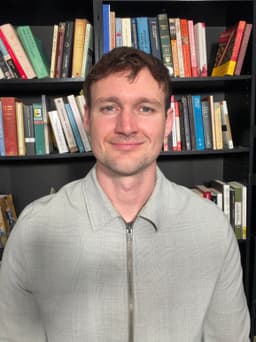
Brandon P
Brandon P is the founder of DeepJung and a researcher in Jungian dream analysis. After a transformative dream experience in 2024, he immersed himself in Carl Jung's Collected Works, studying archetypal psychology, dream interpretation methodology, and the neuroscience that validates Jung's core theories.
His research draws from Jung's compensatory dream theory, Jaak Panksepp's affective neuroscience, Mark Solms' neuropsychoanalysis, and the work of Marie-Louise von Franz. He has analyzed hundreds of dreams using formalized Jungian methodology and is a member of the Baton Rouge Jung Society.
References
Hobson, J.A. & McCarley, R.W. (1977). The brain as a dream state generator: An activation-synthesis hypothesis. American Journal of Psychiatry, 134(12), 1335-1348.
Solms, M. (2000). Dreaming and REM sleep are controlled by different brain mechanisms. Behavioral and Brain Sciences, 23, 843-850.
Walker, M.P. & van der Helm, E. (2009). Overnight therapy? The role of sleep in emotional brain processing. Psychological Bulletin, 135(5), 731-748.
Walker, M.P. (2009). REM, dreams and emotional brain homeostasis. Frontiers in Neuroscience.
Revonsuo, A. (2000). The reinterpretation of dreams: An evolutionary hypothesis of the function of dreaming. Behavioral and Brain Sciences, 23(6), 877-901.
Domhoff, G. W. (2017). The Emergence of Dreaming: Mind-Wandering, Embodied Simulation, and the Default Network. Oxford University Press.
Panksepp, J. (1998). Affective Neuroscience: The Foundations of Human and Animal Emotions. Oxford University Press.
Jung, C.G. (1960). The Structure and Dynamics of the Psyche. Collected Works, Vol. 8. Princeton University Press.
Freud, S. (1900). The Interpretation of Dreams. Macmillan.
van der Helm, E., et al. (2011). REM sleep depotentiates amygdala activity to previous emotional experiences. Current Biology, 21(23), 2029-2032.
Cartwright, R. (1991). Dreams that work: The relation of dream incorporation to adaptation to stressful events in waking life. Dreaming, 1(1), 3-9.
Revonsuo, A., & Valli, K. (2000). Dreaming and consciousness: Testing the threat simulation theory of the function of dreaming. PSYCHE: An Interdisciplinary Journal of Research on Consciousness, 6(8).